Online vs Offline Interior Design: What Is the Real Difference?
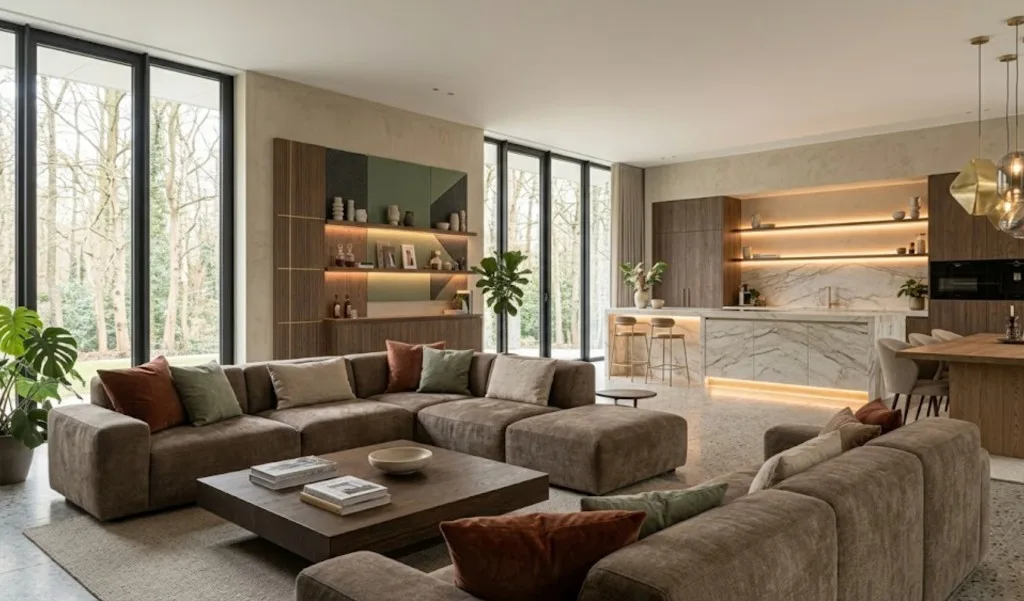
Interior design no longer requires the designer and the client to live in the same city — or even in the same country.
Today, a complete interior design project can be developed through a combination of on-site work and remote coordination. Plans, concepts, visualisations, technical drawings, specifications and meetings can all be managed digitally, while the designer still visits the property when physical presence is important.
This is why the difference between online and offline interior design is no longer simply ‘remote versus in person.’
At Rony Büro, online collaboration does not mean designing a home without ever seeing it.
For international projects, our work normally begins with an on-site visit, during which we study the property, take the necessary measurements, photograph and document the space, collect technical information and discuss the project directly with the client.
The main difference comes later.
With online collaboration, physical visits are fewer, longer and more concentrated. With offline collaboration, the designer can visit the property, showrooms and suppliers more frequently throughout the renovation.
The quality and depth of the design project itself can remain the same.
What Is Online Interior Design?
Online Interior Design is a professional design process in which most project development and communication take place remotely, while the essential physical information about the property is collected directly on site.
At the beginning of the project, we visit the property to understand the space in real conditions.
This allows us to assess dimensions, proportions, natural light, existing technical elements and details that may not be visible on architectural plans.
During this visit, we can also collect:
- measurements and existing-condition information;
- photographs and videos;
- information about plumbing, electrical points and fixed elements;
- client requirements and priorities;
- technical questions that need to be discussed with contractors.
Once this information has been collected, the design can continue remotely.
Space planning, the design concept, visualisations, materials, lighting, furniture, custom joinery and technical documentation can all be developed digitally and reviewed with the client through online meetings.
So online does not mean ‘without site visits.’
It means that site visits are planned differently.
How Online Interior Design Works
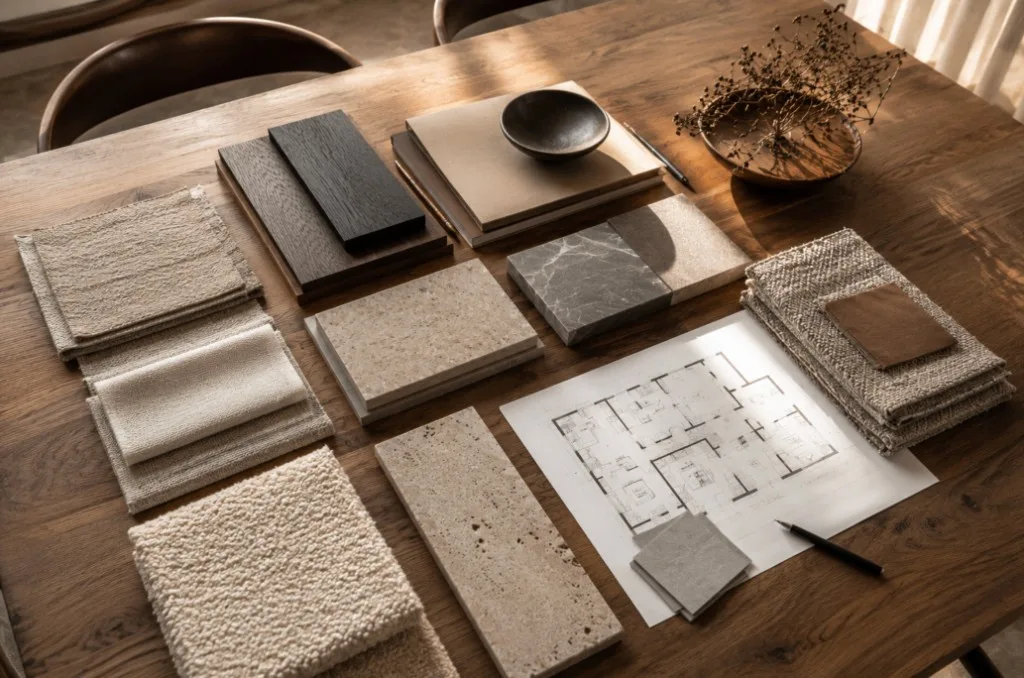
An online project usually combines two types of work: physical site sessions and remote project development.
Instead of travelling to the property for every small question, several tasks are combined into longer and more intensive visits.
A single visit might include measurements, a meeting with the contractor, review of materials, checking existing conditions and discussing technical details.
Afterwards, the project continues remotely through:
- video meetings;
- plans and technical drawings;
- specifications;
- shared project files;
- site photographs and videos;
- communication with contractors and suppliers.
This approach makes it possible to work efficiently across Belgium, the Netherlands, France and other countries without limiting the client to designers located near the property.
Fewer Visits Does Not Mean Less Involvement
This is one of the most important distinctions.
In an online project, the goal is not to eliminate physical presence. It is to use it more strategically.
Instead of many short visits, we plan fewer but more productive working sessions around important stages of the project.
For example, one trip can combine a site inspection, supplier appointments, material selection and meetings with contractors.
The result is a project that remains closely connected to the real property while being organised efficiently across locations.
What Is Offline Interior Design?
Offline Interior Design follows essentially the same professional design process.
The main difference is that the designer is located close enough to the property to be physically involved more frequently.
This can make it easier to arrange spontaneous or short site visits during construction.
The designer can also accompany the client to showrooms, compare samples in person, meet contractors directly at the property and check certain details during implementation.
Offline collaboration can therefore be particularly convenient for projects where many decisions are expected to be made during construction.
However, this does not mean the design methodology itself is fundamentally different.
The project can still include the same stages: concept development, planning, visualisation, material selection, lighting, technical drawings and custom furniture design.
The difference is primarily how often physical presence is possible.
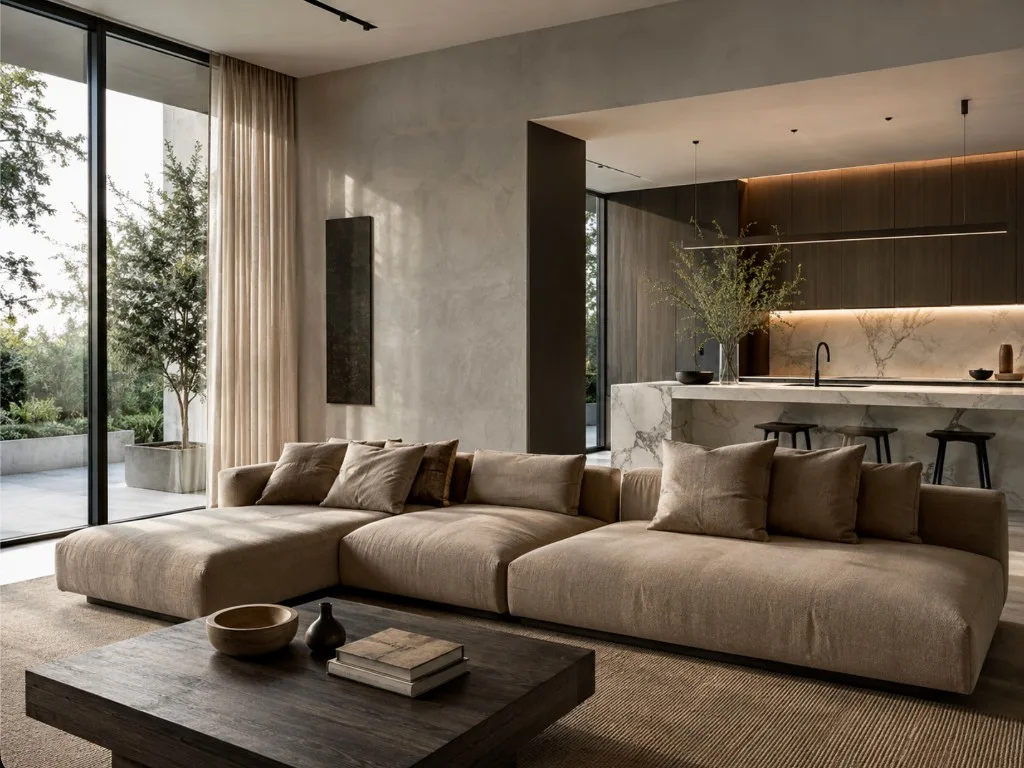
Online vs Offline Interior Design
The easiest way to understand the difference is to compare how the same project activities are organised.
| Aspect | Online collaboration | Offline collaboration |
|---|---|---|
| Initial site visit | Yes. The property is studied and documented before design development. | Yes. |
| Measurements | Collected during planned site work and verified when necessary. | Collected directly on site. |
| Design development | Mainly remote. | Combination of remote and face-to-face work. |
| Client meetings | Mostly online. | Online and in person. |
| Showroom visits | Planned and often combined into concentrated working sessions. | Can happen more frequently. |
| Site visits during construction | Fewer and focused on important stages. | Can be more frequent and flexible. |
| Contractor communication | Online meetings, drawings, photographs, video and selected site meetings. | Online plus regular on-site meetings. |
| Design documentation | Can be the same full professional package. | Can be the same full professional package. |
| Main difference | Physical presence is concentrated around key stages. | Physical presence can happen more often. |
The difference is therefore not the amount of design work.
It is the logistics of the collaboration.
Communication
Online projects rely on structured communication.
Plans, comments, approvals, specifications and decisions are documented digitally, which makes it easier for the client, designer and contractors to work with the same information.
Meetings are usually organised around project milestones rather than travel schedules.
Offline projects allow more discussions to happen directly inside the property or showroom.
However, even during offline collaboration, important decisions should still be documented digitally so that everyone involved in the renovation works from the same approved information.
Site Visits and Measurements
Measurements are one of the biggest concerns clients have when considering online interior design.
And understandably so.
A design project should never be based on assumptions.
This is why our international workflow begins with collecting the required information directly from the property.
During the first site visit, we study and document the existing conditions before developing the project.
Later measurements can also be verified at technically important stages, particularly before producing bespoke furniture or elements that depend on millimetre accuracy.
The client should not have to become the designer’s surveyor simply because the collaboration is organised online.
Material and Showroom Visits
This is one area where the experience of online and offline collaboration can differ more visibly.
When the project is local, showroom visits can happen frequently and spontaneously.
We can compare different materials, furniture pieces, lighting and finishes together throughout the design process.
For international projects, these visits are normally planned in advance and grouped together.
For example, one working day can include several supplier or showroom appointments.
The process becomes more concentrated, but the client still receives professional guidance during the important material and furniture decisions.
Project Supervision
Designing a project and implementing it are two different stages.
During construction, questions naturally appear.
A contractor may discover an unexpected existing condition. A material may need to change. A technical detail may require clarification.
Many of these questions can be resolved remotely using photographs, videos, drawings and direct communication with the contractors.
For international projects, site visits can then be scheduled at the stages where physical inspection creates the most value.
Offline collaboration allows those visits to happen more frequently.
The advantage is therefore speed and flexibility of physical access, rather than a completely different level of design service.
Does Online Interior Design Cost Less?
Not necessarily.
A complete interior design project requires research, planning, design development, drawings, specifications and coordination regardless of where the meetings take place.
The number of hours required to design a kitchen, solve a difficult layout or prepare custom furniture drawings does not disappear because the meetings are online.
What can change is the travel structure.
International projects may require fewer but longer trips, while local projects may involve many shorter visits.
At Rony Büro, the cost of a residential design project is therefore determined primarily by the scope, area and complexity of the project, rather than simply by whether communication takes place online or offline.
For current rates, see how much an interior designer costs or use our design calculator.
Advantages of Online Interior Design
For many clients, the biggest advantage is freedom of choice.
You are not limited to designers located within a short driving distance from your property.
You can choose a studio based on its approach, aesthetic, experience and way of thinking.
This is particularly useful for clients who own or renovate property abroad.
Online collaboration can also make the design process more structured.
Important meetings are planned around specific decisions, documentation is shared digitally and site visits are prepared in advance so that several questions can be solved at the same time.
For busy clients, this can make the entire process more efficient.
Read more about our online interior design process.
Advantages of Offline Interior Design
Offline collaboration offers greater flexibility for physical involvement.
It can be particularly useful when:
- the renovation is complex and site conditions change frequently;
- many custom-made elements need repeated physical checks;
- the client prefers regular showroom visits;
- the project requires frequent coordination between several specialists on site.
Being close to the property allows the designer to react quickly when an additional site visit becomes useful.
Which Interior Design Format Should You Choose?
There is no universal answer.
The right format depends on the project rather than simply on geography.
Online collaboration can work particularly well when:
- the client wants to work with a specific designer regardless of location;
- the property is in another city or country;
- the project can be organised around planned site visits;
- the client is comfortable reviewing plans and decisions digitally;
- most construction coordination can be structured in advance.
Offline collaboration may be more convenient when:
- the renovation requires very frequent site presence;
- many decisions are expected to change during construction;
- the client wants regular joint showroom appointments;
- the project contains a large number of complex bespoke details that require repeated checking.
In reality, many projects sit somewhere between the two.
A large part of the project can be developed remotely, while the designer visits the property at the stages where being physically present creates the most value.
A Hybrid Approach to Interior Design
For many international projects, a hybrid model is actually the most practical solution.
The designer visits the property at the beginning of the project, develops the design remotely and then returns for selected stages during implementation.
Those visits can be scheduled around important moments such as:
- measurements;
- material selection;
- contractor coordination;
- custom furniture verification;
- final design checks.
This gives the project the advantages of both formats: direct understanding of the property and efficient remote collaboration.
Interior Design Without Location Restrictions
Working online should not mean accepting a lower level of service.
It simply requires a different way of organising the process.
At Rony Büro, we combine on-site research with structured remote design development, allowing us to work with residential projects across Belgium, the Netherlands, France and internationally.
The essential difference is simple:
Offline collaboration allows more frequent physical visits; online collaboration concentrates those visits around the stages where they matter most.
The design thinking, planning and professional responsibility behind the project remain the same.
Planning a Renovation?
If you are unsure whether online or offline collaboration would work better for your project, we can first look at the property, renovation scope and level of support you need.
You can explore our portfolio, learn more about our interior design services, estimate the scope of your project, or contact Rony Büro to discuss your home.