Modern House Interior Design: Ideas for a Modern Home
Modern house interior design combines functional planning, clean architectural forms, contemporary materials and carefully selected personal details. A successful modern home feels visually clear and comfortable, while supporting the routines and priorities of the people who live there.
Modern design should not be confused with a temporary trend. A modern home can be minimal, colorful, elegant, expressive or shaped by different cultures, and it should respond to the architecture of the property. The aim is not to remove everything, but to give every element a purpose; personal details keep a clean interior from feeling generic.
At Rony Büro, a strategic interior design studio based in Liège, Belgium, projects follow one principle: strategy before style. The studio studies what the client values first and translates it into a coherent modern interior.
What Defines Modern Interior Design?
Modern interior design is characterized by functional layouts, clear forms, balanced proportions, contemporary materials and a restrained but intentional visual language. It prioritizes how the home works while leaving room for individuality.
It is not defined by white walls, gray furniture, open-plan rooms, designer objects, an absence of decoration or one Instagram aesthetic, but by the logic connecting space, materials, furniture and daily life.
Clean Lines and Functional Space Planning
Clean lines create visual order, but they should follow the architecture and function of the space. Aligned doorways, furniture and lighting, built-in storage and consistent details reduce visual noise and make rooms feel calmer.
Clean design does not mean removing everything. It means deciding what should remain visible and creating an organized place for everything else. A wall of full-height cabinetry, for example, can combine storage, a television, lighting and technical access in one clear composition. Hidden storage keeps surfaces calm, some open shelving adds personality, and integrated solutions stay accessible for repair.
Open-plan layouts still need clearly defined zones, comfortable circulation and realistic clearances, with furniture chosen for scale and proportion, not only appearance.
Colors, Materials, and Textures
Modern interiors often use a controlled color palette, but texture and material variation prevent the space from feeling flat. One or two dominant tones create a calm base, secondary colors connect rooms, and darker, warmer or more saturated accents add contrast. Smooth surfaces balanced with tactile ones, and materials repeated selectively from room to room, create depth and continuity.
Neutral colors are an option, not a rule. A modern home can include:
- warm beige and greige;
- muted green or terracotta;
- deep blue or burgundy;
- colored tiles, dark wood or expressive stone;
- metal accents and carefully selected bright colors.
Color should come from the client’s personality and the desired atmosphere, not from a generic formula. Choose materials for durability and maintenance as well as looks, and confirm key finishes with physical samples, since daylight changes colors through the day.
Minimalism and Personal Accents
Minimalism can provide visual clarity, but personality gives a home meaning. Not every modern home needs to be strictly minimalist.
Art, books, travel objects, inherited furniture or culturally meaningful pieces connect a home to its residents. They work best when planned into the concept, not added at the end, and a few meaningful objects create more character than many generic accessories. Personality can also come through color, custom furniture, material combinations and spatial solutions. The interior should leave space for the client’s life to continue after the photoshoot.
Modern Interior Design Ideas for Different Rooms
In modern house interior design, the same principles adapt to each room’s function. These modern interior ideas share a common language of materials and proportions.
Designing a Modern Living Room
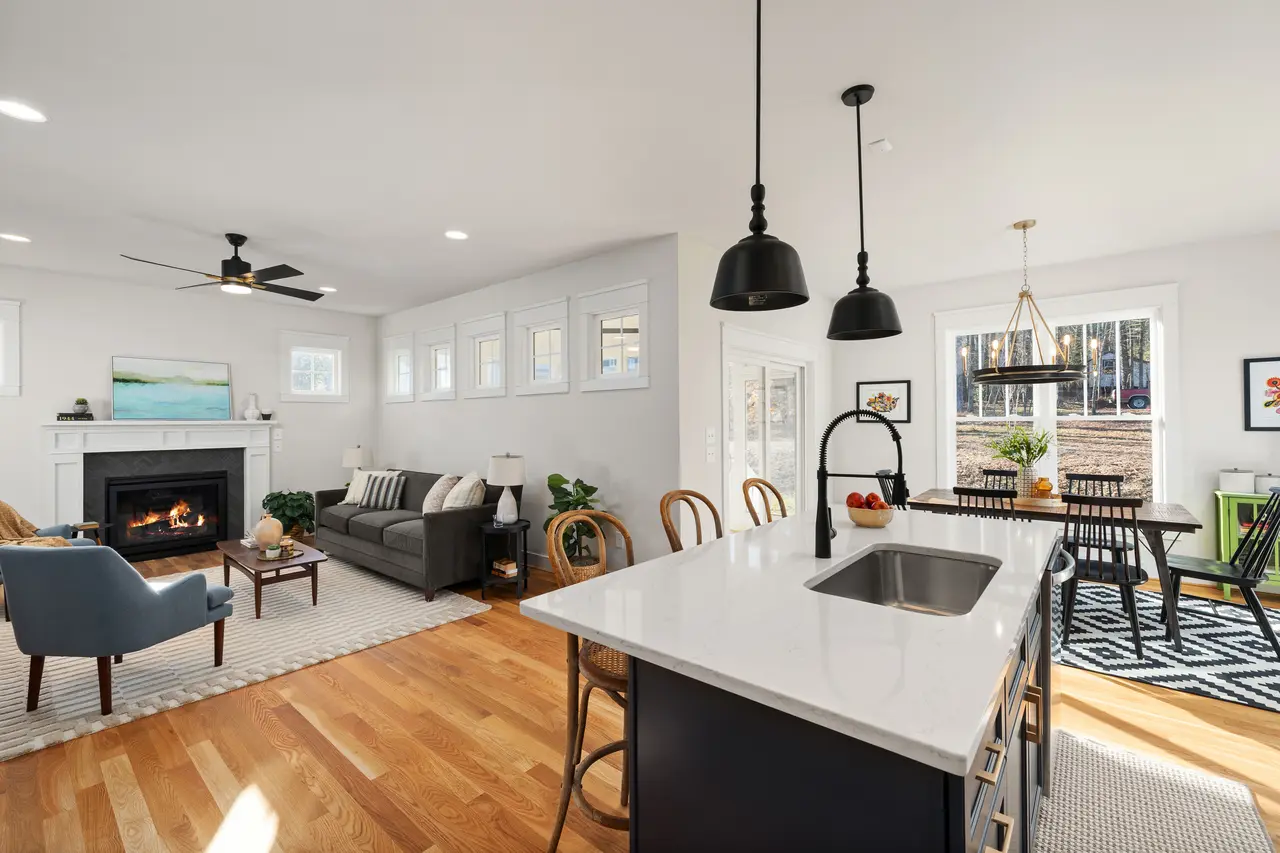
Start with how the room is actually used: conversation, relaxation, television or guests. Furniture should suit the room’s proportions and leave comfortable circulation. A large rug can connect the seating composition, while artwork or one expressive object can become the focal point instead of the television.
Integrate storage and technology, plan several lighting scenarios, and soften clean furniture forms with textiles and tactile materials. A modern living room does not need a feature wall, matching furniture sets or trend-driven decorative panels. It should feel composed but not staged: organized enough to stay calm, personal enough to feel lived in.
Modern Kitchen and Dining Area
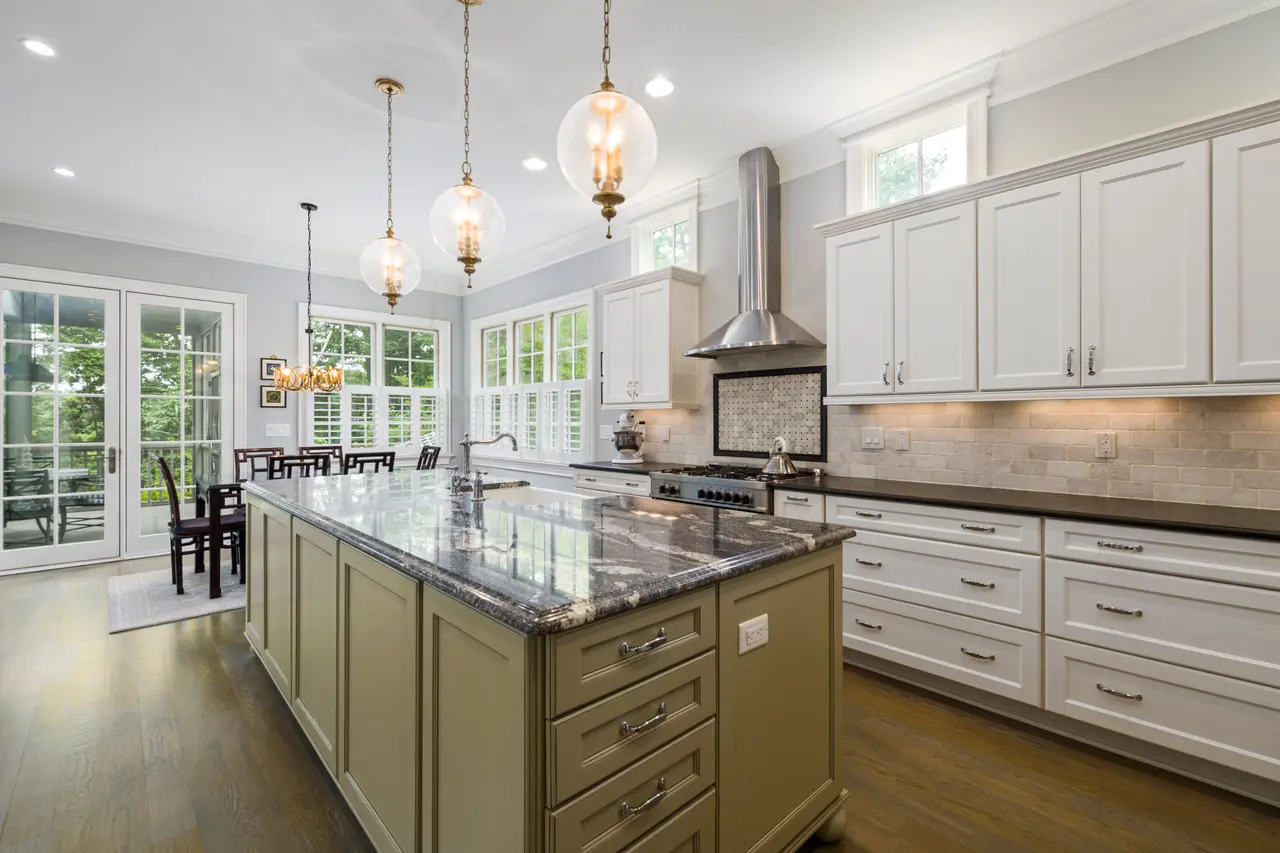
Kitchen design begins with workflow, storage and appliances, not cabinet fronts. Worktops need good light, high-contact areas durable materials, and appliances are integrated only where it improves composition and use. Cabinetry is coordinated with flooring, lighting and adjoining living spaces, and sockets, plumbing and lighting are designed together with the furniture. A showroom kitchen should always be adapted to the actual property, and final site dimensions must be verified before production.
The dining table is sized for the usual number of users, with room for chairs to move. Decorative lighting is positioned according to the final table location, and material, color or lighting can give the dining area its own identity without disconnecting it from the rest of the home. In a modern open-plan home, the kitchen, dining area and living room should feel related without becoming visually identical.
Creating a Modern Bedroom
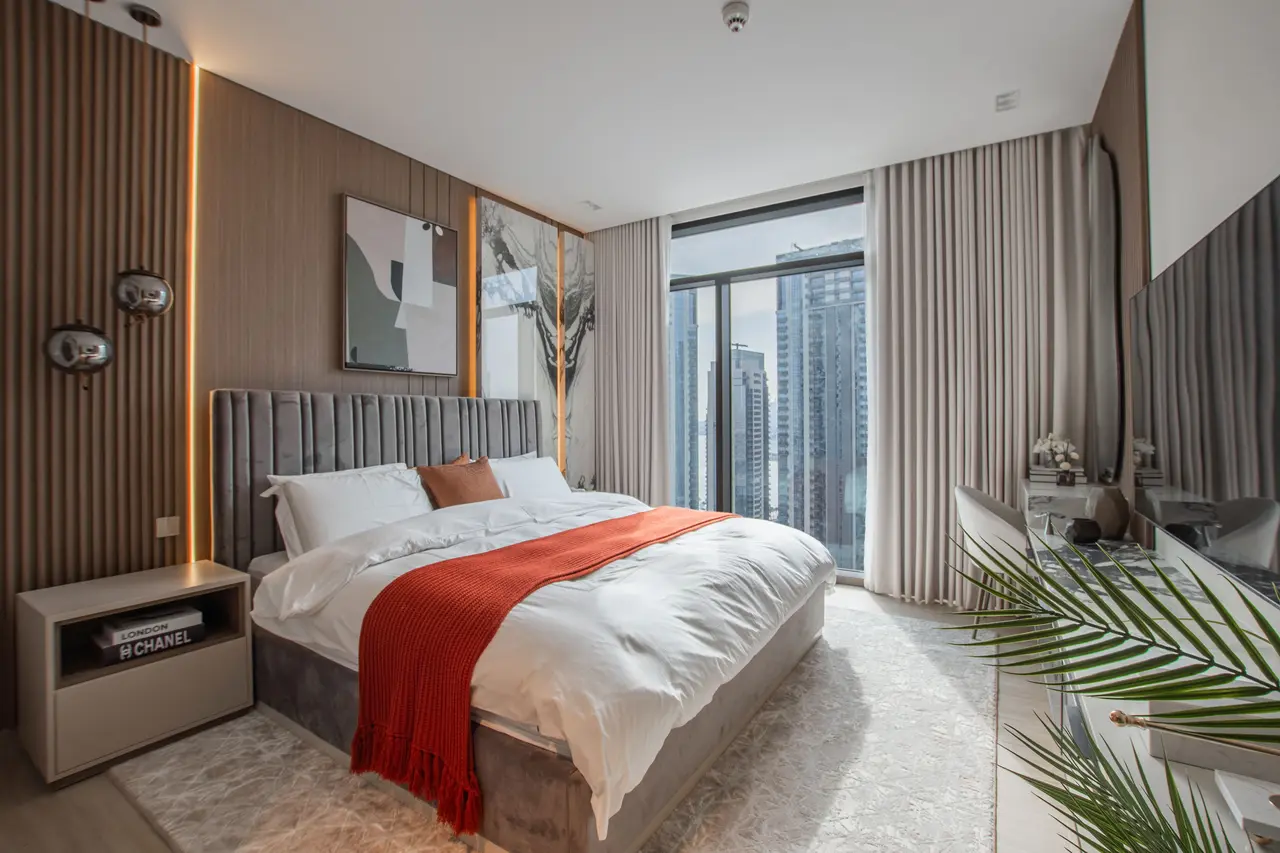
A modern bedroom does not have to look like a hotel room. It should reflect the client’s sleeping habits, clothing storage needs, reading routines and morning and evening lighting, as well as any work or exercise that happens there.
Priorities are visual calm, circulation, acoustic comfort, blackout and privacy, with enough wardrobe space, reachable switches and sockets, layered lighting and soft materials. One or two personal elements make it individual.
Bathroom and Home Office
A modern bathroom feels visually simple because its technical details are resolved first: plumbing, waterproofing, ventilation and comfortable distances between fixtures. Then come mirror and shower lighting, accessible storage, easy-to-clean surfaces, consistent finishes on taps and profiles, and tile size and layout as part of the composition. A small room needs few decorative materials.
A modern home office needs ergonomic seating, daylight without screen glare, power and data, storage, acoustic comfort and a suitable background for video calls. In a multi-use room, flexible furniture keeps work visually separate from relaxation.
Colors and Materials in Modern Interior Design
Modern interiors often use fewer materials, but each material has a clear role. A successful palette balances visual continuity, contrast, tactility and practical performance.
Neutral Colors and Natural Tones
In a contemporary house interior, neutral palettes make architecture, furniture and art more visible, and warm neutrals usually create a softer residential atmosphere than cool grays. Beige, cream, taupe, greige, warm gray and natural wood should not be treated as interchangeable: compare them under the room’s actual lighting.
Dark tones can create depth and define particular zones, and muted colors can serve as a long-term base, not only small accents. Contrast is essential, otherwise a neutral interior looks flat. A neutral scheme is not automatically long-lasting: its longevity depends on proportion, material quality and how well it suits the property.
Combining Wood, Stone, Glass, and Metal
- Wood brings warmth and tactility to furniture, floors and details. Keep a consistent undertone across the project, but it does not need to match perfectly everywhere.
- Stone adds visual weight and individuality. Choose it by porosity, maintenance and intended use, and treat natural variation as a feature rather than a defect.
- Glass lets light move through the interior and separates areas without closing them, but privacy, reflections and cleaning need attention.
- Metal adds precision and contrast and should be repeated with restraint. Check fittings from different brands side by side, because similar finish names can differ in color.
The goal is not to include every material, but to create a limited palette in which the materials support one another.
Lighting as a Design Element
Lighting shapes how the interior is perceived and used throughout the day. Natural light is the starting point, supported by general, task, accent and atmospheric lighting positioned according to furniture and activities, not a uniform ceiling grid.
Warm or neutral light should match each room’s function rather than one color temperature for the whole house. Glare control and dimming improve comfort, indirect light can emphasize architecture, and decorative fixtures should never be the only source. Lighting is coordinated with ceilings, custom furniture and electrical plans.
How to Plan a Modern Home Interior?
The full design sequence is described in our guide to home design and planning; below are the points that matter most for a modern home.
Space Planning and Furniture Arrangement
Begin with accurate site measurements and a client brief. Developer and estate agency plans are preliminary references and must be verified. Functions and circulation are defined before furniture is selected, using actual furniture dimensions.
Consider visual axes and focal points, keep daylight, doors and routes clear, and plan storage as part of the architecture. Check how spaces work when several people use them at once, coordinate furniture with lighting, sockets and floors, and allow for future family changes.
Combining Functionality with Aesthetics
In a successful modern interior, functional and aesthetic decisions are developed together. For example:
- a storage wall organizes the room and creates its main visual composition;
- an island improves kitchen workflow while marking the boundary between kitchen and living area;
- a lighting system supports daily activities and highlights materials and architecture;
- a bench provides seating, storage and a transition between zones;
- a tiled bathroom niche organizes daily products and becomes part of the wall composition.
The most elegant solution often resolves several needs at once without appearing complicated. For busy and international clients, Rony Büro offers English-speaking support and a single point of contact, with residential interior design documented in Revit BIM so that the approved concept matches what is built.
Avoiding Common Interior Design Mistakes
- Copying an interior designed for a different property, with other proportions, light and architecture.
- Treating modern design as an absence of color, which often makes rooms feel cold.
- Using too many fashionable materials or making every wall and object an accent.
- Choosing appearance before function, including furniture that is too large or too small.
- Relying only on ceiling spotlights instead of layered lighting.
- Ignoring storage, which quickly undermines a clean look.
- Mixing metal finishes without actual samples.
- Ordering custom furniture before final measurements.
- Choosing materials without considering maintenance.
- Designing rooms separately without a common visual language.
- Removing all personal objects to achieve a “clean” look.
A modern home should feel clear, not empty; expressive, not overloaded; and carefully planned, not artificially perfect.
Conclusion: Creating Personalized Modern Interior Design
Modern house interior design is defined not by one color palette or furniture style, but by the relationship between function, proportion, materials, light and personal character. Whether you are building, buying or renovating a house, the aim is a functional modern home that supports contemporary life rather than a fixed visual formula. Planning creates the foundation, materials and light create atmosphere, storage organizes daily life and personal objects give identity. Trends can inspire selected decisions but should not control the project, so the home stays comfortable and relevant as the client’s life develops.
Rony Büro creates personalized homes for smart and busy people who value their time. See completed projects in the portfolio or get an initial estimate with the price calculator.
Planning a modern house interior? Rony Büro can help you create a clear, functional and personal design concept that connects space planning, materials, lighting, furniture and technical implementation. Book a free introductory consultation to discuss your home.
Frequently Asked Questions About Modern House Interior Design
What Is Modern House Interior Design?
Modern house interior design combines functional layouts, clear forms, contemporary materials, thoughtful lighting and personal details. It is an approach to creating a comfortable and visually coherent home rather than one fixed decorative style.
Does a Modern Interior Have to Be Minimalist?
No. Minimalism can influence modern design, but a modern home can also include color, art, texture, expressive furniture and meaningful personal objects, as long as the overall composition stays clear.
Which Colors Work Best in a Modern Home?
There is no universal palette. The right colors depend on daylight, orientation, architecture, existing elements and the atmosphere the residents want to create. Always test samples in the actual room.
How Can I Make a Modern Interior Feel Warmer?
Use natural wood, textiles, tactile materials, layered lighting, art, plants and personal objects. They soften clean forms without creating visual clutter.
How Do I Keep a Modern Interior from Becoming Outdated?
Invest in a strong functional layout and durable permanent materials, and use trends with restraint in elements that are easier to replace, such as textiles, accessories or paint.
Can Modern Interior Design Work in an Older House?
Yes. Contemporary solutions can be combined with historic or existing architectural elements, such as original floors, moldings or beams, instead of removing the property’s character.