Modern Drawing Room Interior Design: Ideas for a Stylish Living Room
Modern living room interior design is the planning of a living space around the way people relax, talk, receive guests and spend time together. Style matters, but it should grow from a functional layout, comfortable furniture, thoughtful lighting and the personality of the residents.
A modern living room is the social and emotional center of the home, and it often has several jobs: family evenings, entertaining, reading, media and sometimes dining or work. The aim is a room that feels visually clear and refined without losing comfort or character.
At Rony Büro, a strategic interior design studio based in Liège, Belgium, every living room starts with how the residents actually live, not with a predefined style. Strategy comes before style.
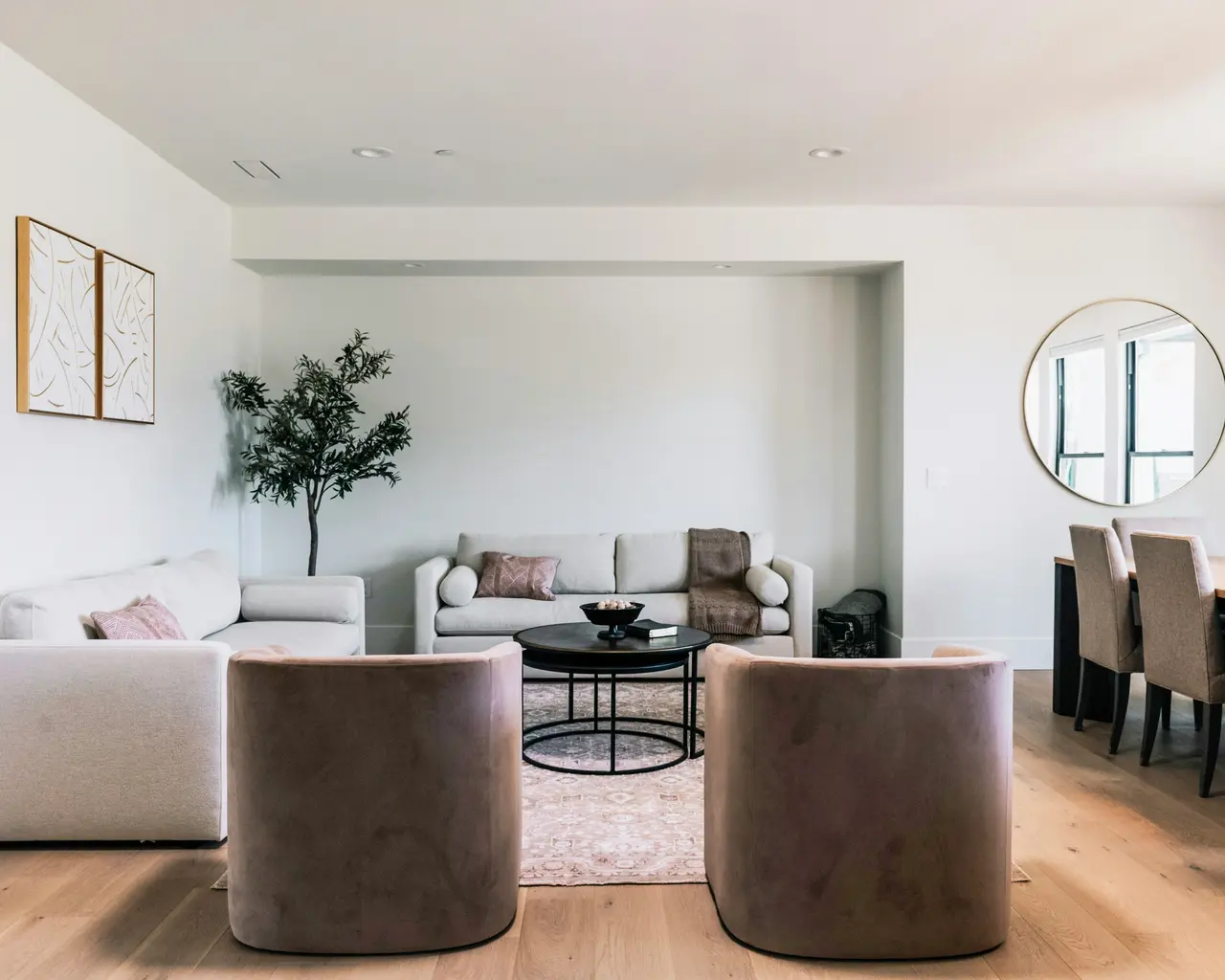
What Defines Modern Drawing Room Interior Design?
Modern drawing room interior design combines functional furniture planning, balanced proportions, contemporary materials and layered lighting. A successful living room feels visually clear and refined without losing comfort or personal character.
The two terms come from slightly different traditions. A drawing room was traditionally a formal space for receiving guests, while a contemporary living room is usually more flexible and informal. Today one room often combines formal entertaining, everyday relaxation, dining and media, which is why “modern living room” is the more natural term for most European homes.
Clean Lines and Harmonious Space Design
Clean lines do not require an empty room. They come from clear relationships between furniture, architecture, lighting and storage: clear circulation routes, furniture aligned with the architecture and scaled to the room, integrated storage, preserved natural light and a limited number of focal points. Connections with the dining area and kitchen should feel deliberate, and the room should avoid unnecessary visual fragmentation.
Harmony is created through repeated proportions, coordinated furniture heights, consistent material details, visual alignment, a controlled color palette and clear zoning. Before choosing furniture, consider doors, windows, radiators and existing architectural features.
Colors, Materials, and Textures
Begin with the atmosphere the room should create. Neutral colors can provide a base, but they should not become an automatic formula: wood, textiles and tactile surfaces add warmth, while dark or saturated colors can create depth. Existing floors, doors and architectural elements should be part of the decision.
Repeat materials selectively, choose durable finishes for high-contact areas, especially with children or pets, and evaluate color in the room’s daylight with physical samples before final approval. A successful modern living room usually uses fewer materials with greater intention, rather than many finishes competing for attention.
Combining Comfort with Modern Aesthetics
Comfort includes correct seat depth and height, sufficient circulation, comfortable viewing distances, convenient side tables, accessible sockets, acoustic softness, glare control, pleasant temperature and daylight, and space for personal belongings.
The most visually impressive sofa is not always right for the room, and low furniture may look elegant but feel uncomfortable for some people. Minimalism should not remove useful functions. Comfort must be judged for the specific household, and a modern interior can feel refined without looking formal or untouchable.
Modern Ideas for Drawing Room Design
The best living room design ideas are adapted to the room’s dimensions, architecture and daily use, so that furniture, decor and lighting form one composition rather than competing for attention.
Modern Sofas and Seating Areas
Start by defining the main use of the seating area, then choose between a sectional, a modular sofa or separate seating. Check real dimensions, consider views and conversation, and keep circulation clear. Occasional chairs add flexibility, the sofa should relate to the rug and coffee table, and modern living room furniture works better as a considered mix than as a matching set. Balance comfort, durability and scale.
A large sectional sofa may offer more seats but can reduce flexibility and visually dominate a compact room. Furniture should be selected after testing the layout, not before.
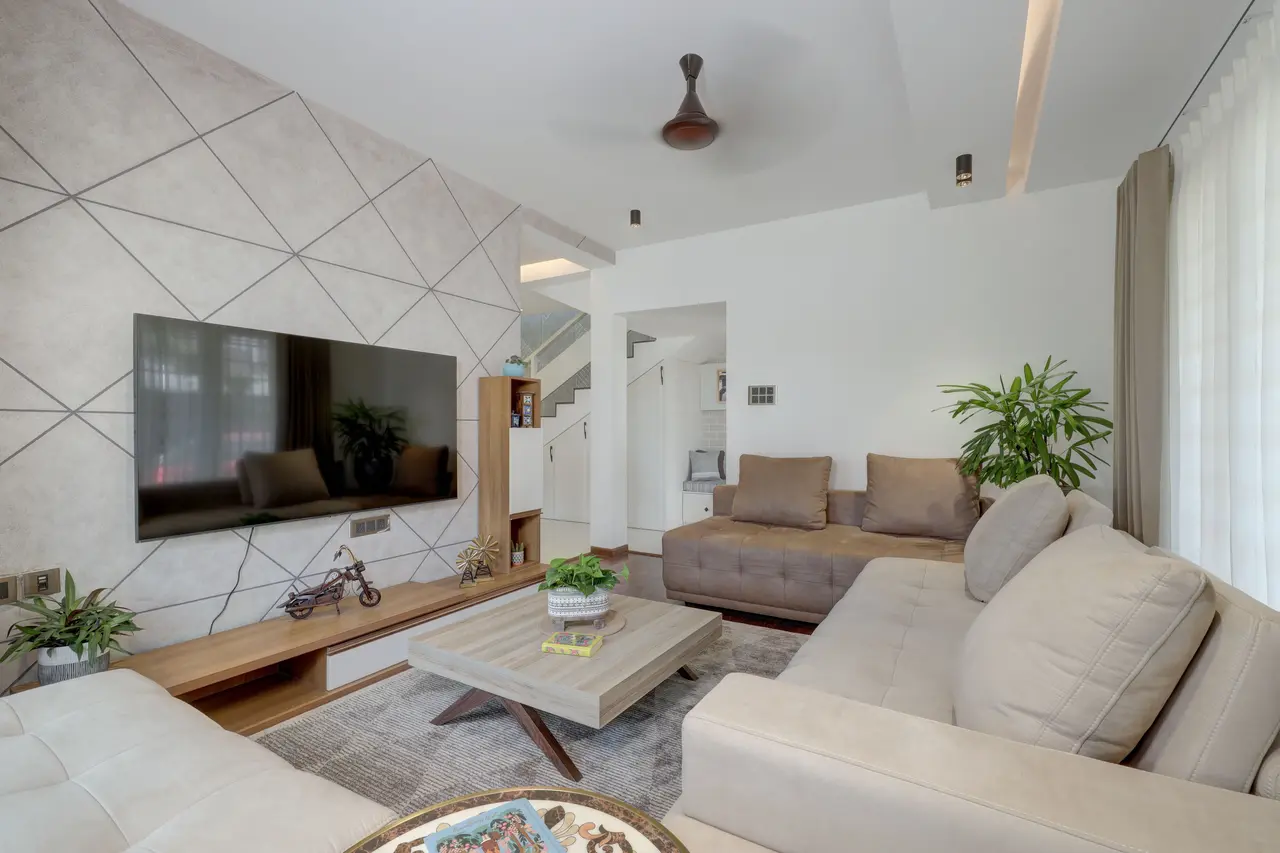
TV Walls and Decorative Elements
A television wall should be integrated into the room’s composition. The screen position follows seating and viewing comfort, while storage, cables, sockets, lighting and ventilation are coordinated from the start. A TV wall can combine media equipment, books, display, art and concealed storage.
The television should not automatically become the only focal point, and decorative wall treatments need a reason beyond following a trend. Custom TV furniture requires technical drawings and final site measurements. A good TV wall solves technical and storage needs while remaining visually balanced when the screen is switched off.
Rugs, Curtains, and Accessories
Choose a rug for the complete seating composition so that it connects the furniture rather than isolating individual pieces. Curtains provide privacy, acoustic softness and daylight control; their length and fullness matter, and decorative and blackout layers can be combined where needed. Cushions and textiles add color and tactility.
Art, books and meaningful objects bring personality, while too many small accessories create clutter. Accessories should make the living room feel personal, not simply fill empty surfaces.
Lighting for a Cozy Atmosphere
A modern living room needs several lighting layers:
- General lighting for everyday use;
- Reading light beside seating;
- Indirect architectural lighting to soften ceilings and walls;
- Accent lighting for art or materials;
- Dining lighting where the room includes a table;
- Decorative and evening lighting for atmosphere.
Control glare, place lights in relation to furniture, add dimming where appropriate and coordinate switches with room entrances and seating. Avoid a ceiling filled only with spotlights, and use portable lamps where they add flexibility. A cozy atmosphere is created by several controlled light sources rather than one decorative fixture or excessively warm light.
Colors and Materials for a Modern Living Room
Colors and materials should create one consistent visual language for the room and connect it with the rest of the home.
Neutral and Warm Color Tones
Warm whites, beige, taupe and greige are good possible base colors, while cold, flat gray combinations tend to feel less inviting. Contrast can come from wood, darker tones or color, and muted green, blue, burgundy or terracotta work well where they suit the room. Test colors according to daylight and orientation, consider existing flooring and furniture, and create continuity with adjoining rooms. A neutral palette does not automatically mean a long-lasting one: its success depends on proportion and quality.
Combining Wood, Stone, Glass, and Metal
- Wood adds warmth and tactility.
- Stone adds visual weight and natural variation.
- Glass preserves light and visual openness.
- Metal adds precision and contrast.
- Textiles soften acoustics and hard surfaces.
Not every material needs to appear in every room. The palette should be limited and connected to the wider home concept, with attention to maintenance, resistance to scratches and stains, color consistency, natural variation, realistic budget and availability in the local market.
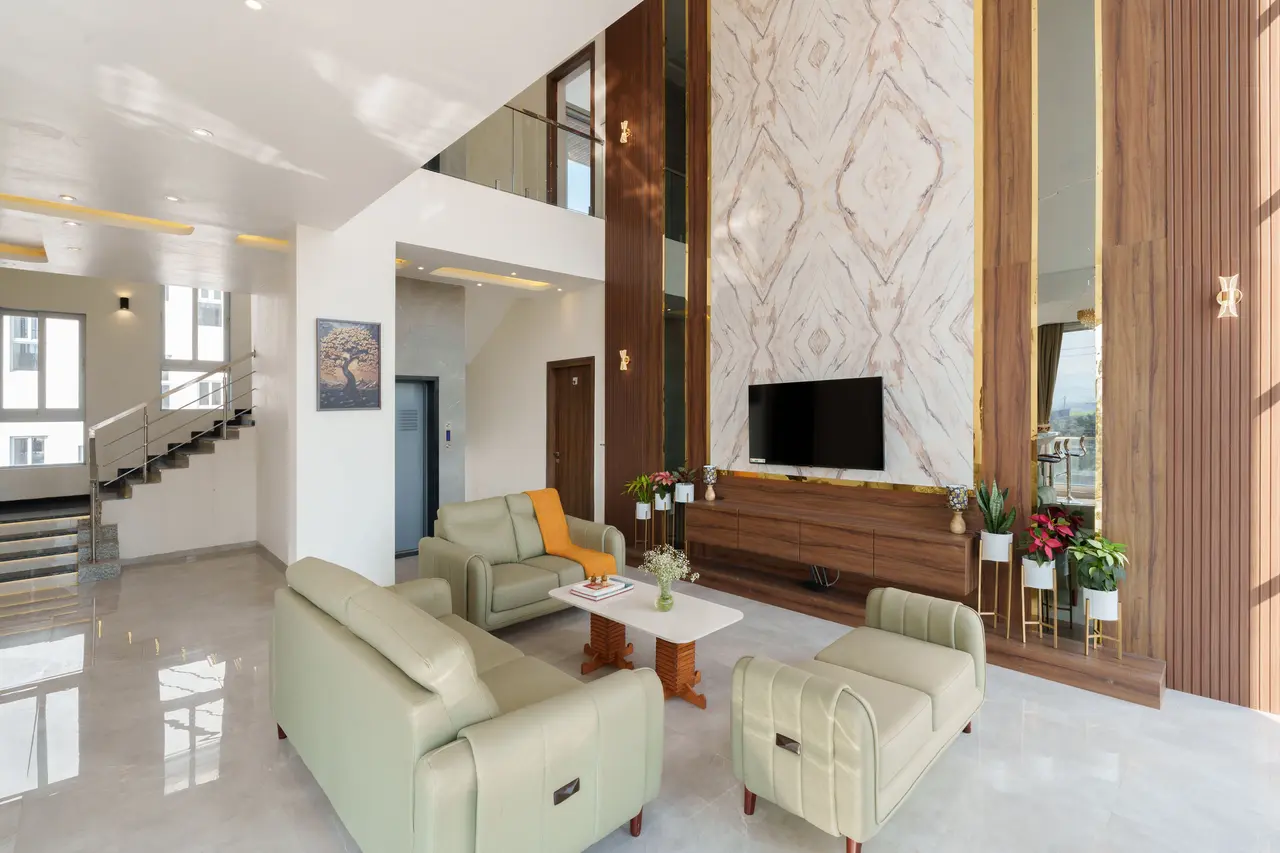
Accent Walls and Decorative Surfaces
Identify the room’s architectural focal point first. An accent can be created through material, color, art or furniture composition, with lighting integrated carefully. Avoid a different finish on every wall, connect the accent surface to the rest of the palette and consider how it looks from adjoining rooms. Custom furniture is often a better alternative to purely decorative cladding. A wall should become an accent because it supports the room’s composition, not because every living room is expected to have one.
How to Plan a Modern Drawing Room Interior?
Living room space planning comes before style. Plans from developers or estate agents must be verified on site before design work begins, then the room is planned in a clear sequence.
Space Planning and Furniture Arrangement
- Measure and document the room.
- Define all required functions.
- Identify circulation routes.
- Position the largest furniture elements.
- Test real furniture dimensions.
- Establish focal points and views.
- Add storage.
- Coordinate lighting and electrical points.
- Confirm materials and furniture.
- Develop visualization and technical drawings where required.
For example, a living room with a balcony needs a clear route to the balcony door; a large sofa placed across it may look balanced in a photo but make daily use inconvenient. For the full design process, see our guide to home design and planning.
Considering Functionality and Comfort
Consider the number of regular users and guests, television and media use, reading, children and pets, storage, dining, working from home, accessibility, acoustic comfort and maintenance. A room can support several functions without looking fragmented when zoning is created through furniture, lighting and materials, for example a rug and pendant marking the dining area in an open-plan space.
Avoiding Common Living Room Design Mistakes
- Buying the sofa before planning the room.
- Using furniture that is too large or too small.
- Pushing every item against a wall.
- Ignoring circulation.
- Selecting a rug that is too small.
- Planning only one lighting source.
- Installing electrical points before confirming furniture.
- Making the television the only focal point.
- Using too many decorative materials.
- Copying an interior with different room proportions.
- Prioritizing photographs over daily comfort.
- Leaving no place for personal objects.
- Designing the room separately from adjoining spaces.
The goal is not to fit every attractive idea into one room, but to create a clear hierarchy of functions, materials and focal points.
Conclusion: Creating a Personalized Modern Living Room
Modern living room interior design should reflect real routines. Functionality creates the foundation, furniture defines circulation and zoning, materials and light create atmosphere, and personal objects give the room its identity. A contemporary living room design should feel current without depending on short-lived trends.
Rony Büro creates homes for smart and busy people who value their time. Explore the studio’s residential interior design and portfolio, or get an initial estimate with the price calculator.
Planning a new living room or redesigning an existing one? Rony Büro can help you develop the layout, furniture composition, material palette, lighting and custom solutions as one coherent project. Book a free introductory consultation to discuss your home.
Frequently Asked Questions About Modern Living Room Interior Design
What Is Modern Drawing Room Interior Design?
It is the planning of a living or reception room with functional furniture layouts, balanced proportions, contemporary materials and layered lighting, creating a space that feels clear and refined while staying comfortable and personal.
What Is the Difference Between a Drawing Room and a Living Room?
A drawing room was traditionally a formal room for receiving guests, while a living room is more flexible and informal. In modern homes, one room usually combines both roles, along with relaxation, media and sometimes dining.
How Should I Arrange Furniture in a Modern Living Room?
Measure the room, define its functions and circulation routes, then place the largest pieces first using real dimensions. Establish focal points, add storage and coordinate lighting and sockets before buying furniture.
How Do I Make a Modern Living Room Feel Warm?
Use wood, textiles, tactile materials, warm neutral or muted colors, several layers of lighting and personal objects such as books and art. They soften clean lines without creating clutter.
What Size Rug Should I Choose for a Living Room?
Choose a rug large enough to connect the whole seating composition, so that the sofa and chairs relate to it, rather than a small rug that sits isolated under the coffee table. The exact size depends on the furniture layout and the room.
How Should Lighting Be Planned in a Living Room?
Combine general, reading, accent, indirect and decorative lighting, positioned according to the furniture layout. Add dimming where useful and place switches near entrances and seating.
Do I Need Custom Furniture for a Modern Living Room?
Not always. Custom furniture is most useful for TV walls, built-in storage, niches and rooms with unusual proportions. It requires technical drawings and final site measurements before production.